
Introduction
In 2025, Pakistan’s solar market has moved rapidly toward advanced technologies, especially **bifacial solar panels**. With rising KE tariffs and an increasing number of installations in DHA, Clifton, PECHS, Gulshan and Scheme 33, customers want better performance, higher efficiency and long-term reliability.
This article gives you a **complete comparison** between monofacial and bifacial panels — including cost, efficiency, ROI and best use cases for Karachi’s climate.
What Are Monofacial Solar Panels?
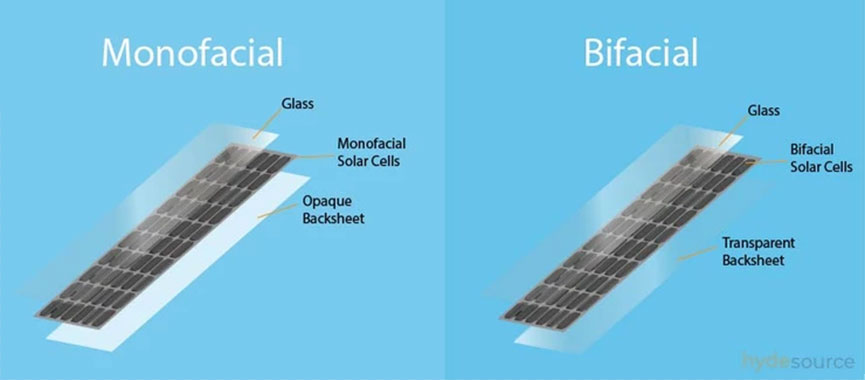
Monofacial panels are the traditional solar panels used for decades. They capture sunlight only from the **front side** and convert it into electricity.
- ✔ Most common panel type
- ✔ Lower upfront cost
- ✔ Reliable and tested technology
- ✔ Performs well in standard rooftop installations
Typical Efficiency
18% – 21% depending on brand and model.
What Are Bifacial Solar Panels?
Bifacial panels generate electricity from **both the front and the back surface**. The rear side captures reflected sunlight from the floor, roof, or light-colored surfaces.
- ✔ Up to 30% extra power generation
- ✔ Works exceptionally well on high rooftops
- ✔ Reduces LCOE (Levelized Cost of Energy)
- ✔ Best for hybrid and on-grid systems
Typical Efficiency
21% – 24% depending on the brand.
Monofacial vs Bifacial – Key Comparison
| Feature | Monofacial | Bifacial |
|---|---|---|
| Energy Generation | Normal | 10% – 30% more |
| Best Use Case | Small homes, shaded roofs | Terrace roofs, open spaces, commercial setups |
| Cost | Lower | Higher (but worth the ROI) |
| Durability | Good | Very high (glass-glass build) |
| Ideal Angle | South-facing, 25–30° | 15–20° with rear clearance |
| ROI | 2.5 – 3 years | 1.8 – 2.4 years |
Performance in Karachi Weather
Karachi’s high sunlight exposure, reflective surfaces (tiles, concrete) and rooftop space make bifacial panels extremely effective.
Real Karachi Performance Data
- 🔆 Bifacial panels perform **12% – 18% better** on average
- 🔆 Higher performance during hot months due to glass cooling
- 🔆 Works perfectly with GoodWe ET Series and Solis hybrid systems
Cost Difference (2025 Market Rates)
| System Size | Monofacial Cost | Bifacial Cost |
|---|---|---|
| 10 kW | Rs. 1.65M – 1.75M | Rs. 1.80M – 1.95M |
| 15 kW | Rs. 2.45M – 2.60M | Rs. 2.75M – 2.95M |
| 30 kW | Rs. 4.55M – 4.80M | Rs. 5.10M – 5.40M |
Yes, bifacial panels cost more — but the ROI is faster because they generate more power.
Which Panel Type Should You Choose?
Choose Monofacial If:
- Your rooftop has shadows (tanks, walls, trees)
- You want the lowest upfront cost
- You have a small residential setup
Choose Bifacial If:
- You want maximum efficiency
- You have open rooftop space
- You want faster ROI
- You are installing 10kW, 15kW, 30kW or above