
Why Maintenance Matters
Solar systems don’t need daily attention, but they are not “install and forget” either. Dust, pollution, bird droppings, loose connections and ignored warnings can easily reduce your production and damage equipment.
With Karachi’s coastal dust, humidity and salty air, a basic maintenance routine can add **hundreds of extra units per month** to your generation.
Tip #1 – Clean Panels the Right Way
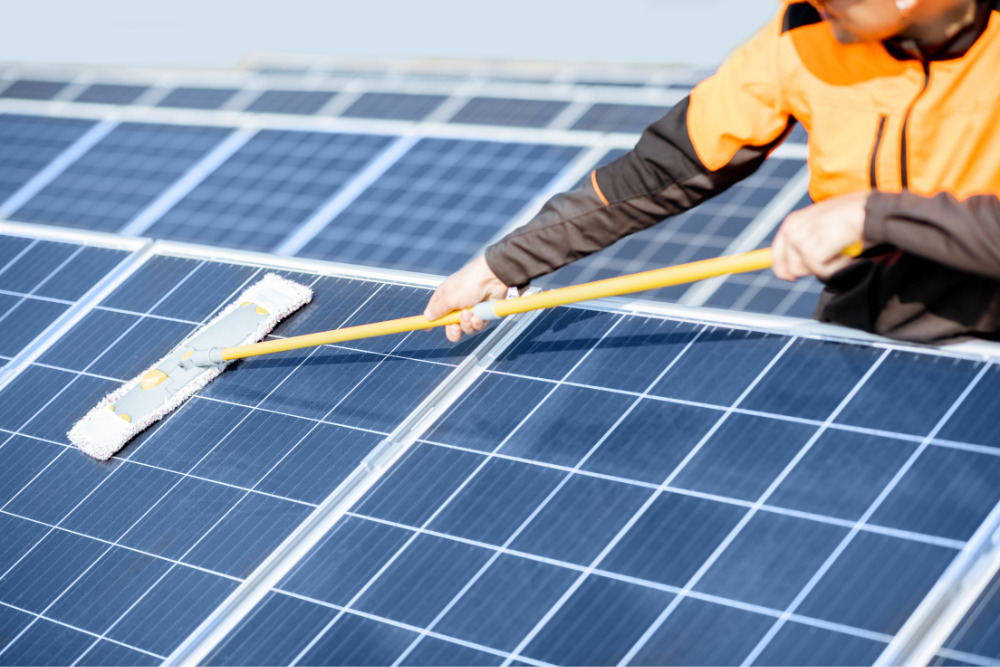
The most important task is panel cleaning. A thin layer of dust can cut efficiency by 5–8%, while thick dirt can reduce production by 20% or more.
- Clean early morning or late evening (when panels are cool)
- Use soft water + a non-abrasive brush or microfiber mop
- Never use harsh chemicals or detergents
- Do not stand directly on panels
Tip #2 – Maintain a Monthly Cleaning Schedule
Create a simple calendar:
- Normal areas: 1–2 times per month
- Dusty/construction areas: weekly
- After heavy storms or sea winds: extra cleaning
If you are busy or have a large system, consider a professional **solar cleaning service** once or twice a month.
Tip #3 – Visually Inspect Cables & Conduits
Every 3–6 months, visually check:
- DC cables from panels to combiner box
- Conduits on roof for cracks or damage
- Signs of rodent bites or exposed copper
If you see any damage, call your installer. Do **not** tape high-voltage DC lines yourself if you’re not trained.
Tip #4 – Check Inverter Screen & App Regularly
Your inverter is the “brain” of the system. Make a habit of:
- Checking daily/weekly energy production
- Monitoring fault or warning codes
- Comparing expected vs actual generation
Most modern inverters (GoodWe, Solis, Sungrow, Huawei) have mobile apps — use them.
Tip #5 – Watch for Unusual Noises or Smell
If you hear buzzing, crackling, or smell burning plastic near the inverter or DB:
- Turn off the system safely (as per shutdown procedure)
- Contact your installer immediately
- Do not keep running a system that sounds or smells wrong
Tip #6 – Keep Inverter Area Ventilated
Inverters generate heat. Overheating reduces efficiency and lifespan.
- Keep the inverter in a shaded, ventilated area
- Do not block air vents
- Keep it away from direct water exposure
Tip #7 – Don’t Ignore Your Net-Metering Bill
Your KE bill is a free “performance report”. Monitor:
- Imported units vs exported units
- Any sudden drop in export
- Changes in monthly trend
If exports drop but your usage is the same, your system might not be performing optimally.
Tip #8 – Annual Electrical Tightening & Testing
Over time, thermal expansion can loosen electrical connections.
- Ask your installer for an **annual preventive maintenance visit**
- They should check torque on terminals, breakers and SPD
- Test earthing and insulation where required
Tip #9 – Protect Your System During Extreme Weather
During severe storms or cyclones:
- Ensure mounting structure is firmly fixed
- Check for loosened bolts after heavy winds
- If you expect flying debris, schedule a professional inspection afterwards
Tip #10 – Keep All Documents & Warranty Cards Safe
Store:
- Panel warranty and serial numbers
- Inverter warranty card
- Net-metering approval documents
- As-built drawings and single-line diagram
These help greatly if you ever claim warranty or change equipment.
How Often Should You Call a Professional?
For residential systems up to 15 kW:
- 1–2 professional services per year is usually enough
- Large commercial systems may need quarterly checks
Need Professional Maintenance for Your Solar System?
360Sol.pk offers inspection, cleaning and health-check services for residential, commercial and industrial sites in Karachi.
Book a Maintenance Visit